
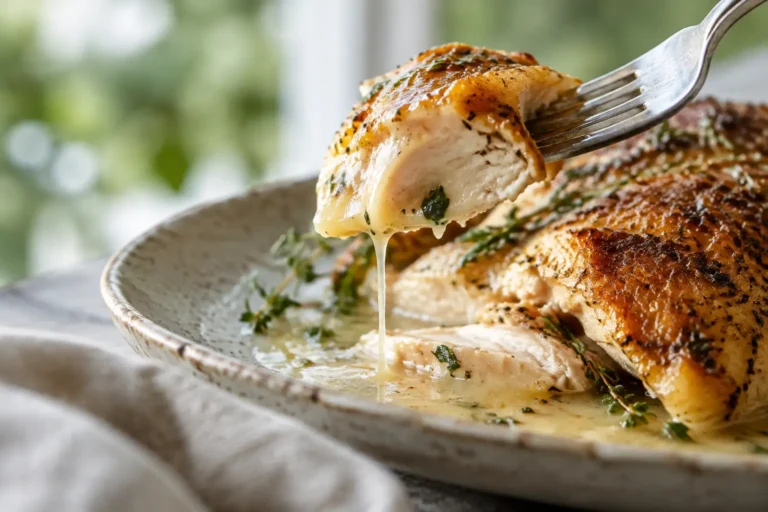
Turn Those Browned Bits Into Your Best Sauce
Deglazing means adding liquid to a hot pan and scraping up the flavorful browned bits left after cooking. For deglazing a pan with wine, remove the cooked food, lower the heat from searing to medium, then add wine and scrape while it bubbles. The browned bits dissolve into the liquid instead of disappearing down the sink.
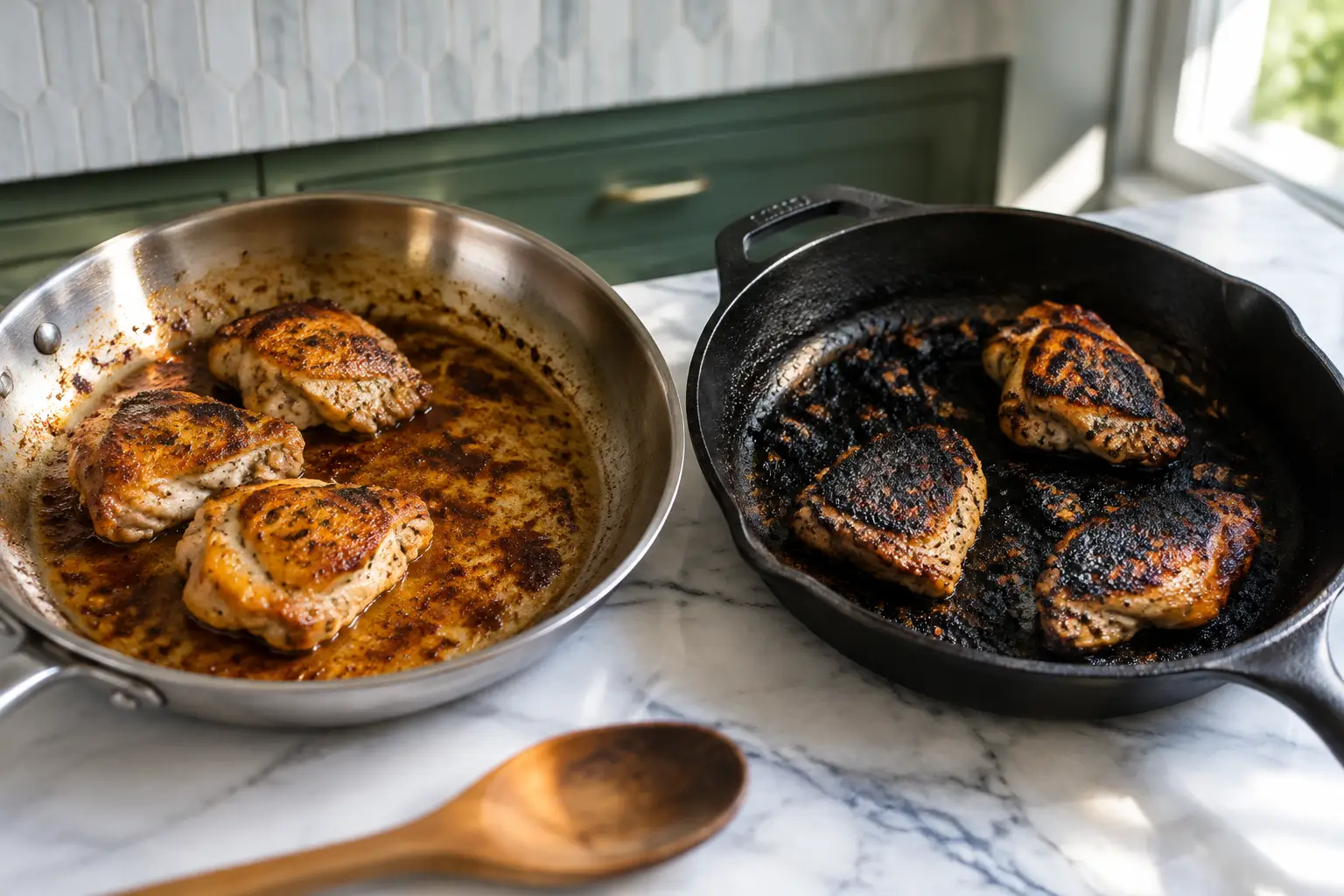
Those bits are called fond: the golden-to-deep-brown layer attached to the pan. They hold roasted, savory flavor. Wine brings acidity and aroma, stock brings savory depth, and water lets the flavor already in the pan lead. The important distinction? Brown is delicious. Black and bitter is not.
I love a technique that makes dinner better without creating another project. A glossy sauce over golden chicken, with a little brightness cutting through the richness? That is the payoff here. Let’s get into it.
If the term still feels unfamiliar, my explanation of what it means to deglaze a pan gives you another way to picture the transformation.
Why Wine Works—And Where The Flavor Starts
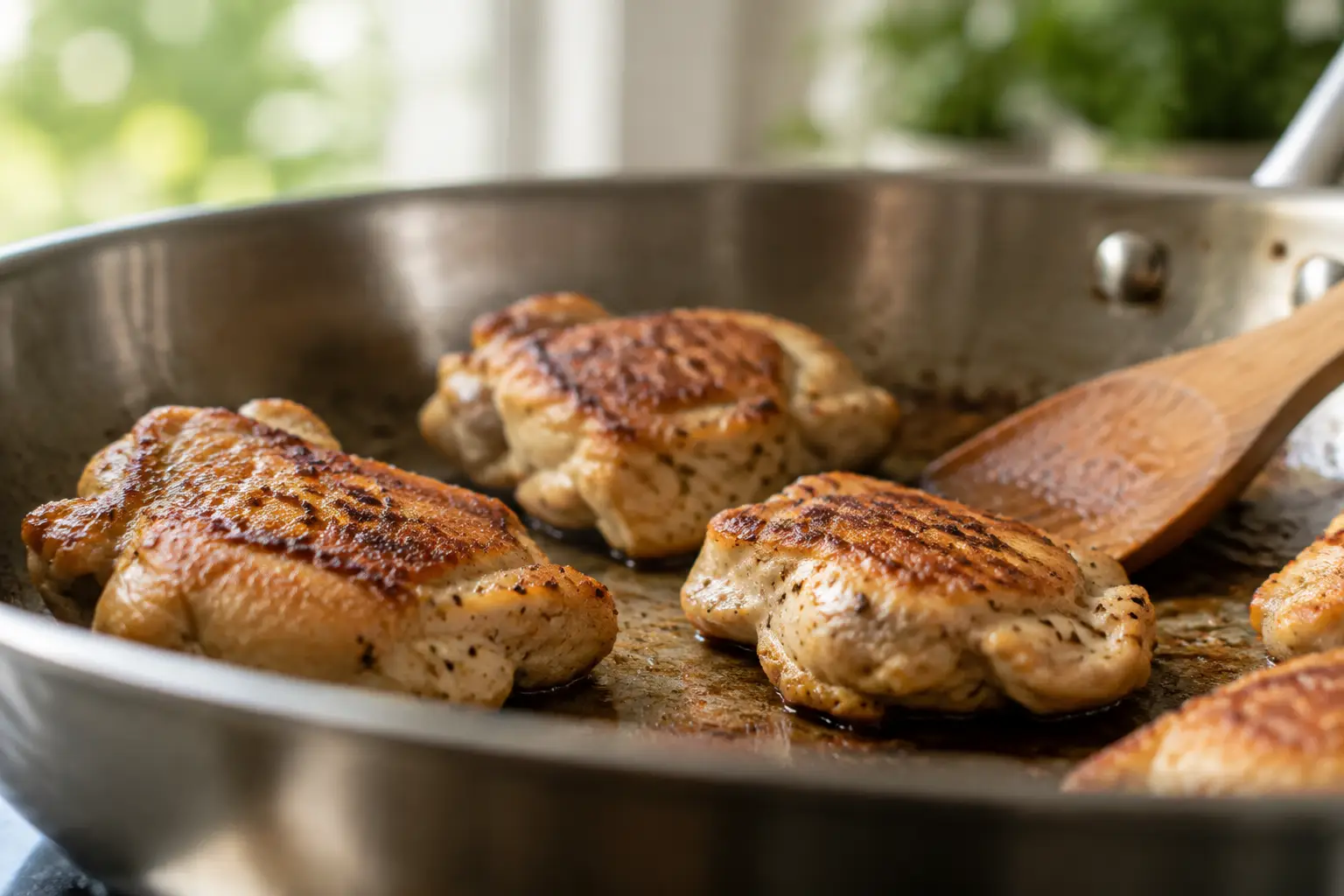
Wine works because it is mostly water, which loosens and dissolves much of the browned residue. Its acidity adds balance, while its alcohol helps carry some aroma compounds into the sauce.
But wine cannot create the browned flavor we skipped earlier. That comes from browning: heat changes proteins and sugars at the food’s surface, producing deeper aromas and savory complexity. This is often called the Maillard reaction. We want dry enough food, enough space in the pan, and sufficient heat for browning rather than steaming.
The French term déglacer gave us “deglaze,” and the technique is central to classical pan sauces. The practical idea travels much further: loosen what cooking has left behind, then fold that flavor into the next layer. In Caribbean cooking, that same attention to browning, aromatics, and liquid builds deeply satisfying gravies (which is one of the reason I think Caribbean dishes are better than many other cuisines). My guide to Caribbean flavor-building ingredients and techniques explores that layering.
Deglazing and making a sauce are related, but not identical. Deglazing releases the fond. Reducing—simmering liquid so water evaporates—concentrates it.
Choose The Liquid For The Flavor You Want
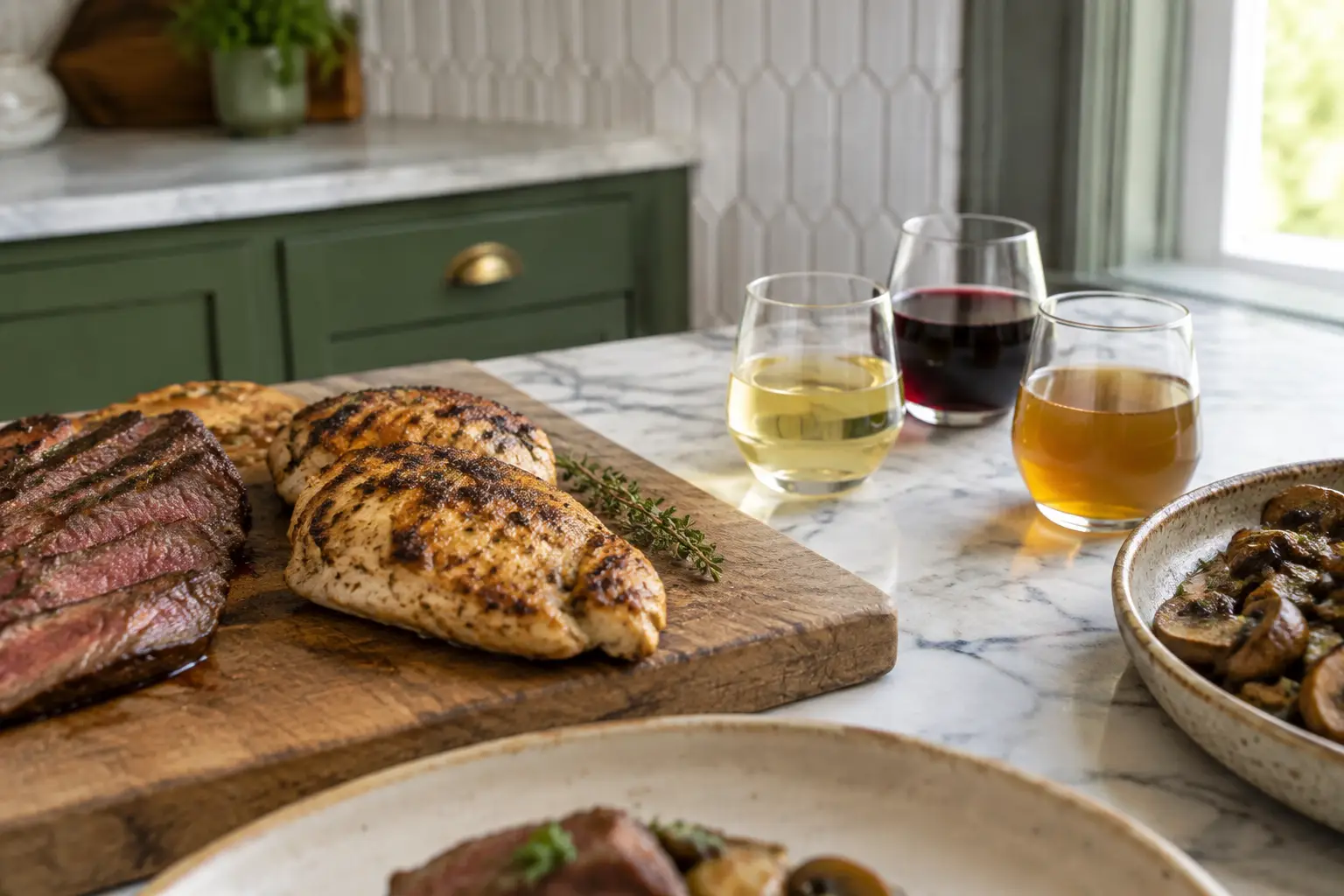
The best wine for deglazing a pan is usually dry, reasonably priced, and pleasant enough to drink. “Dry” means it has little noticeable sweetness; sweetness becomes more concentrated as a sauce reduces.
| Liquid | Flavor Contribution | Good Uses | Main Watch-Out |
|---|---|---|---|
| Dry white wine | Bright acidity; citrus, apple, or herbal notes | Chicken, fish, pork, mushrooms | Strong oak flavors can dominate a delicate sauce |
| Dry red wine | Darker fruit, acidity, deeper color | Steak, lamb, beef, hearty mushrooms | Very tannic wine can turn harsh when concentrated |
| Unsalted or low-sodium stock | Savory depth; gelatin-rich stock also adds body | Meat, poultry, vegetables, alcohol-free sauces | Salt concentrates during reduction |
| Water | Releases fond without adding another strong flavor | A richly browned pan with flavorful drippings | Offers less body than gelatin-rich stock |
| Red or white wine vinegar | Concentrated acidity and wine-derived character | Rich meat, pork, chicken, or vegetable sauces | Use as an accent with stock or water, not a cup-for-cup wine replacement |
| Rice vinegar | Clean acidity; seasoned versions also bring sugar and salt | Ginger-forward or lighter vegetable sauces | It is not rice wine |
| Rice wine | Fermented aroma; flavor varies by style | Stir-fried meats, mushrooms, ginger-based sauces | Some cooking versions contain added salt |
| Pan juices | The concentrated flavor of the cooked food | Roast chicken and meat sauces | Separate excess fat; fat alone does not dissolve fond effectively |
White Wine Versus Red Wine
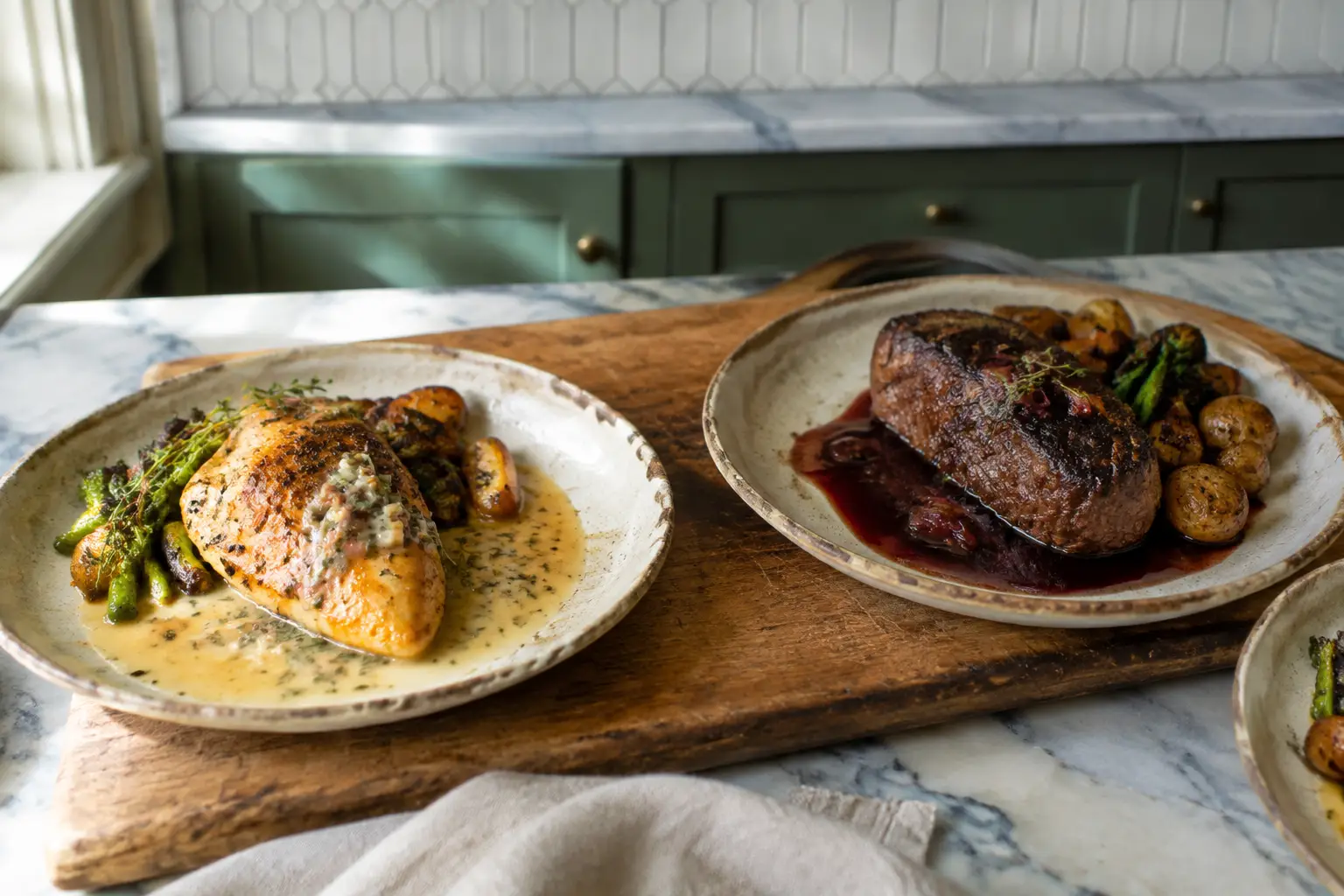
Deglazing a pan with white wine gives a lighter, brighter foundation; red wine adds darker fruit and a deeper-colored sauce. Match the wine’s intensity to the food rather than treating either as a rigid rule.
Sauvignon Blanc and Pinot Grigio are useful white options. Pinot Noir and Merlot work for many red-wine sauces. Tannins—the drying sensation you notice in some red wines—become more obvious as liquid reduces, so a powerful, mouth-drying red is not automatically the best choice.
For deglazing a pan with red wine, think steak, lamb, or browned mushrooms. White wine suits chicken and fish, but it can also make a lovely lighter sauce for pork. You are choosing a flavor direction, not passing an exam.
Stock, Vinegar, And Pan Juices
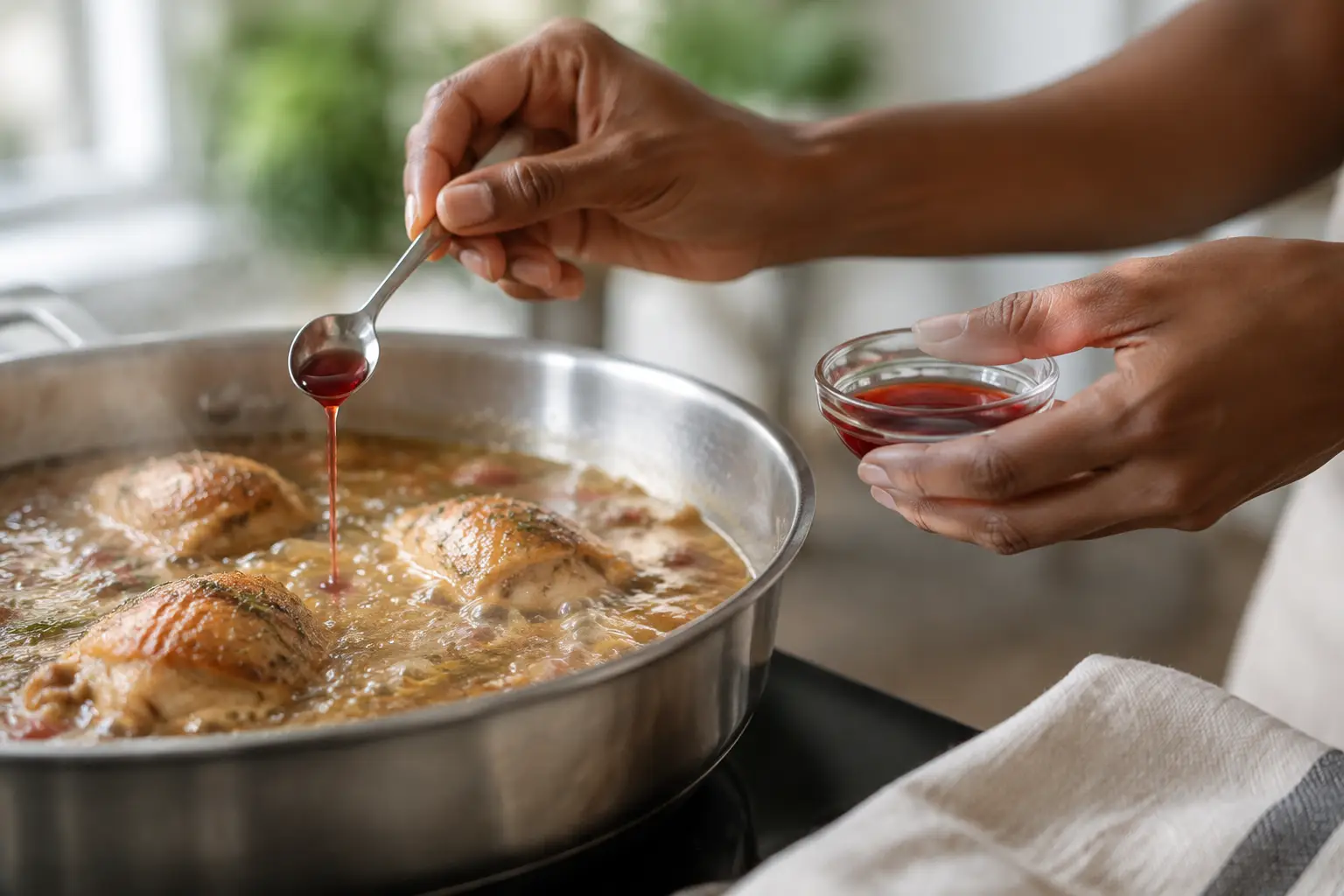
Deglazing a pan without wine works beautifully because wine is optional, not essential. Stock is the most useful substitute when you want savory depth; water is perfectly respectable when the fond already tastes rich (but why use water when you an use stock?!)
Vinegar needs a different approach. It contains much more acid than wine, so use it to brighten a stock- or water-based sauce rather than replacing the entire wine quantity. You can deglaze a pan with red wine vinegar, but a heavy-handed pour leaves a sauce sharply sour even after simmering.
Pan juices contain both watery juices and fat. The juices enrich a sauce; excess fat makes it greasy. Keep that distinction in mind before tipping everything into the pan. For a closer look at balancing sourness rather than simply adding more, see my guide to using vinegar and citrus to brighten food.
Pick A Pan That Builds Flavor You Can See
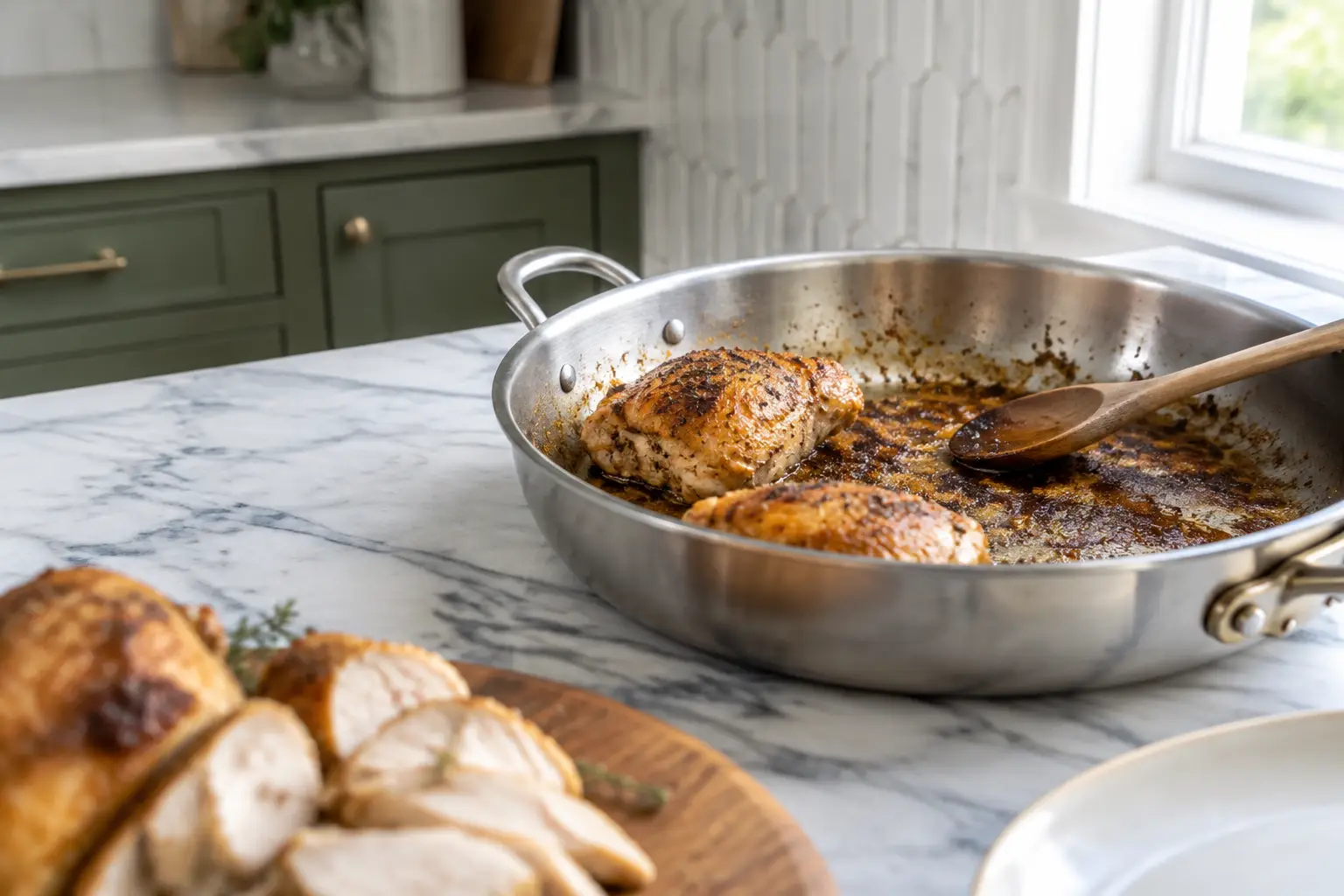
Stainless steel is my first choice for frequent wine-based deglazing because it develops fond, makes its color easy to judge, and handles acidic liquids well. A sturdy pan that heats evenly matters more than an expensive name.
Choose enough surface area for the food to brown without crowding, and enough depth to stir bubbling liquid comfortably. A skillet works well for a quick sauce; a sauté pan gives more headroom. My stainless-steel pan guide for deglazing explains the useful differences.
Cast iron also develops excellent fond. Keep acidic sauces brief in bare cast iron, though: prolonged acidic cooking can affect the seasoning and introduce metallic flavors. Enameled cast iron is a better fit for a longer acidic simmer. My cast-iron deglazing guide covers that choice in more detail.
Nonstick can make a quick sauce from juices, but its easy-release surface produces less attached fond. Uncoated aluminum is also less suitable for prolonged wine or vinegar reductions because it reacts with acid.
Get The Heat, Amount, And Timing Right
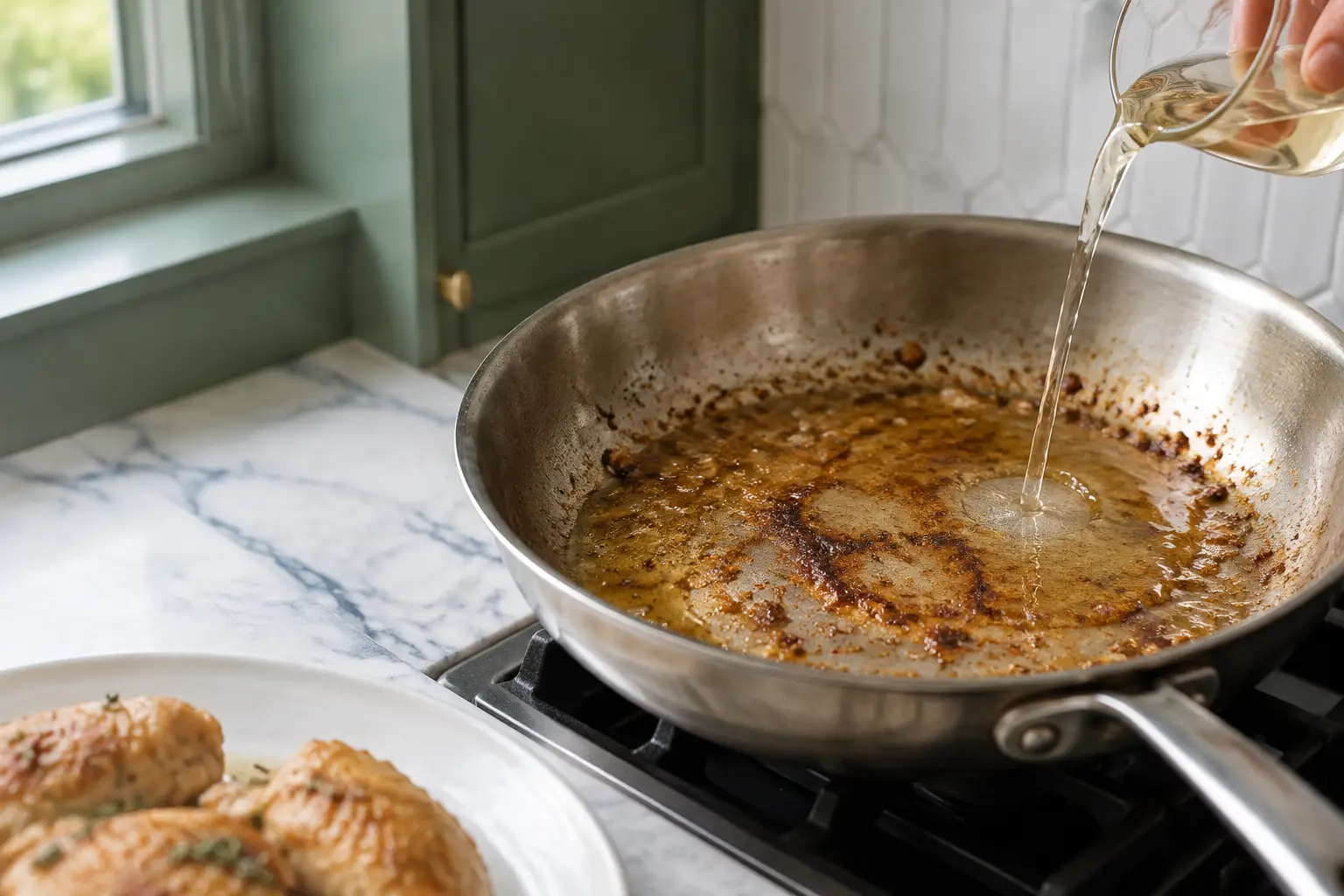
Deglaze after browning and removing the food, while the fond is still brown and the pan is hot. Lower searing heat before adding liquid so the wine bubbles instead of vanishing in a violent flash.
I sometimes get impatient and skip preparation too. But having everything ready before cooking—what chefs call mise en place—makes this moment calmer. Measure the wine and prepare your aromatics before the pan needs your attention, not while the fond is getting darker.
| Decision | Practical Starting Point | What To Watch |
|---|---|---|
| How much wine to deglaze a pan | About 1/4–1/2 cup for a typical 10–12-inch skillet; a recipe can call for more | Enough to wet the base and keep the fond submerged while scraping |
| Heat after searing | Medium; adjust toward medium-high if bubbling is weak | A lively simmer, not an aggressively smoking pan |
| Fond release | Often 30–60 seconds | The spoon leaves a clean path across the pan |
| Wine reduction | Often 2–5 minutes for a modest amount | Less liquid and a softer wine aroma; use the recipe’s reduction target |
| Butter finish | Off the heat | A glossy sauce without an oily layer |
- Remove the food and inspect the fond. Keep the browned residue, but discard a genuinely scorched base. Pour off excess fat while retaining enough for any aromatics.
- Soften aromatics if the recipe includes them. Onions or shallots can burn in a just-seared pan, so reduce the heat first.
- Add the liquid safely. Take the pan off an open flame, pour measured wine from a cup rather than the bottle, and return it to controlled heat. Expect steam and keep your face back.
- Scrape across the entire base. Work into the edges as the liquid bubbles. We are dissolving the fond, not just moving wine around. A flexible spatula edge can help lift fond while being gentle on the pan.
- Reduce and finish as the recipe directs. Add any further liquid, concentrate to the desired consistency, and taste before final seasoning.
Scraping and reducing are separate jobs. The browned bits can release quickly while the sauce still needs time to concentrate. And simmering wine does not guarantee an alcohol-free result; use stock or water when alcohol needs to be avoided.
See The Technique Through From Roast To Sauce
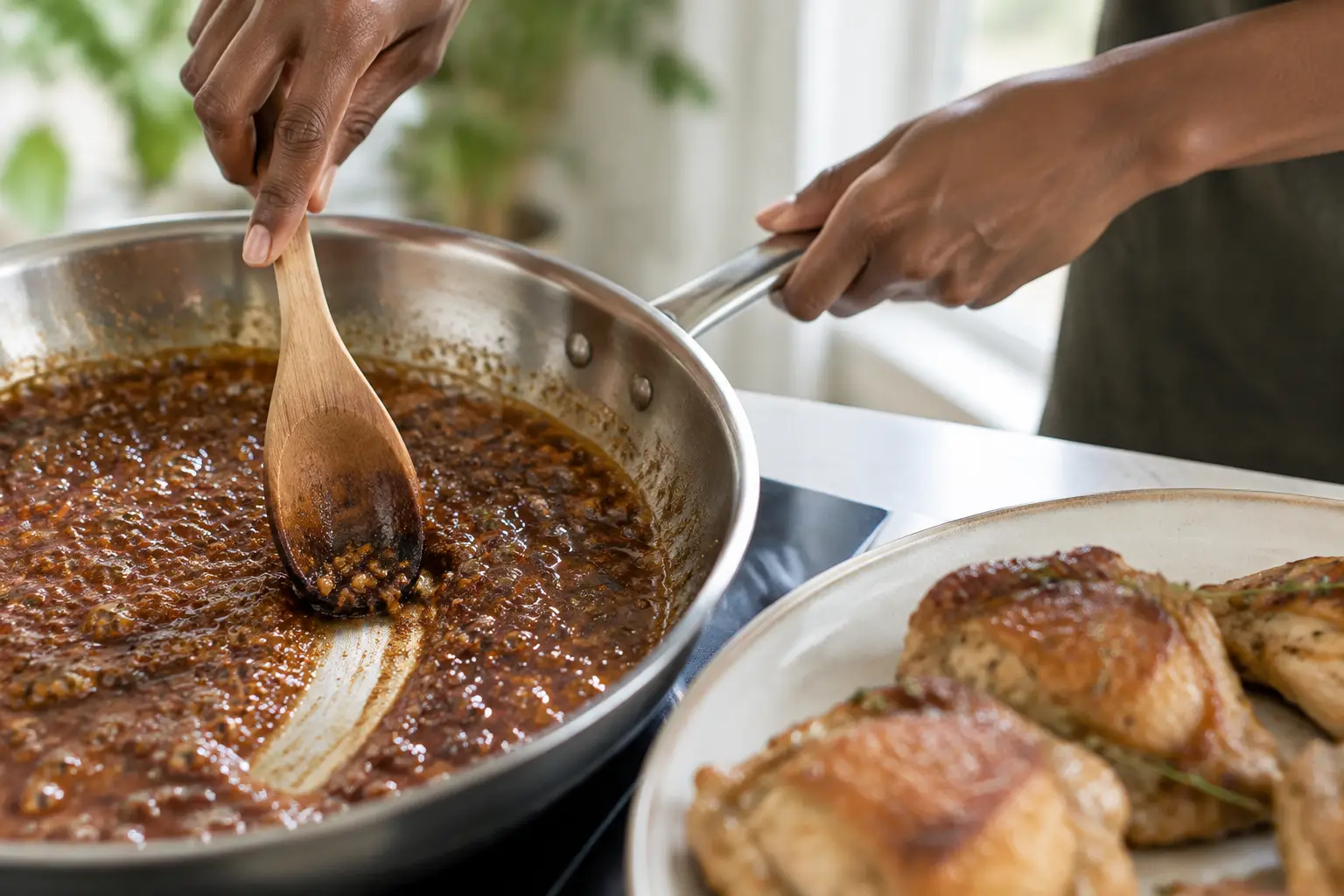
This roast-chicken demonstration shows the full progression: browned drippings, softened shallots, wine reduction, then a butter finish. Water lets the chicken flavor lead rather than competing with it.
White Wine Pan Deglaze To Butter-Sparkle Finish Recipe
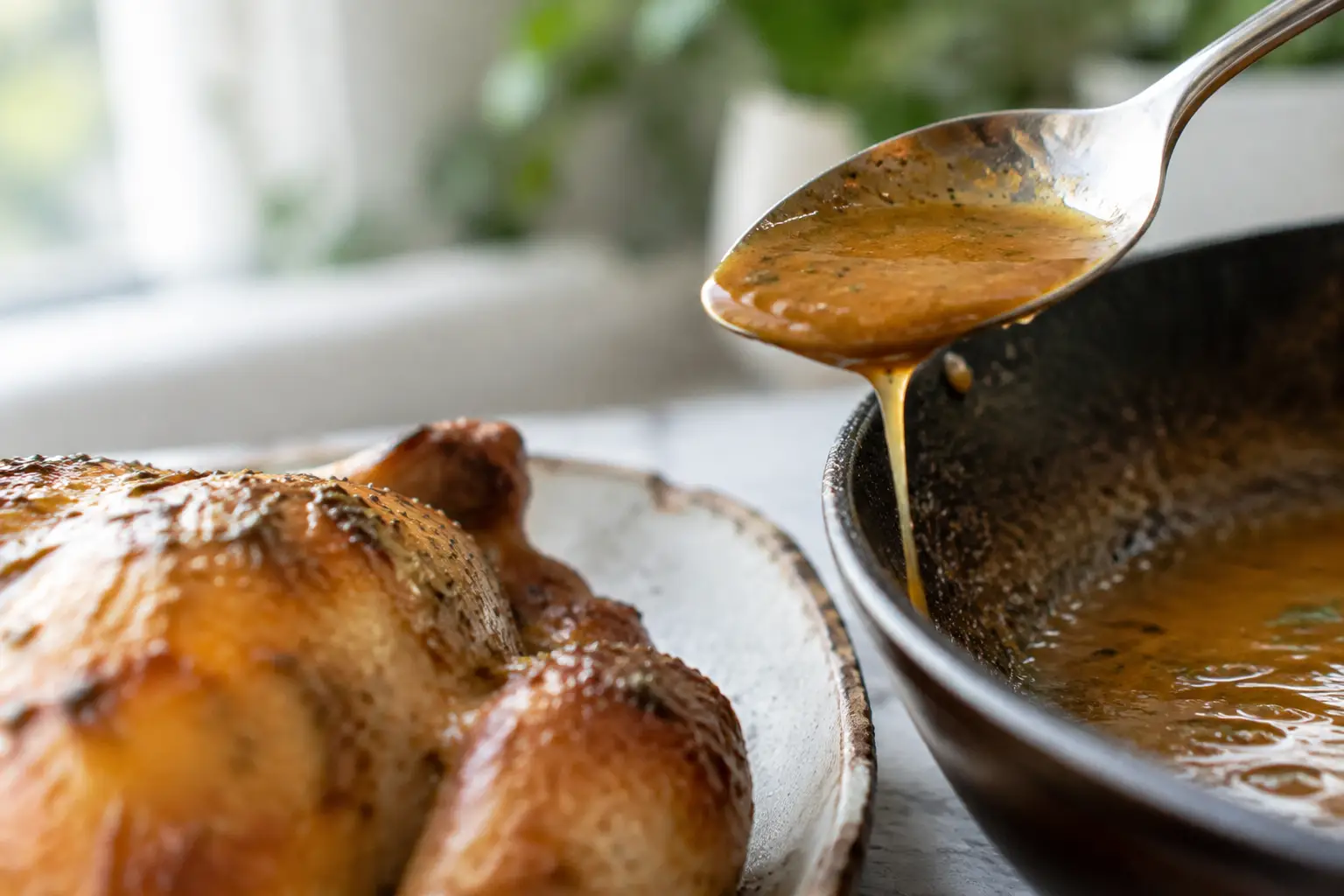
Golden chicken and a silky, savory sauce make a very good case for keeping those roasting juices. The wine supplies brightness; butter rounds the edges and gives the finished sauce its shine.
Serves: 4 | Prep Time: 15 minutes | Cook Time: 1 hour
- 1 whole chicken, 3–4 lb
- 1/2 medium yellow onion, peeled
- 1 carrot, peeled
- 1/3 cup shallots or scallion, minced
- 2 cloves minced garlic
- 1 cup dry white wine
- 1 cup water
- 1 tablespoon avocado oil
- 2 tablespoons unsalted butter
- 1 teaspoon kosher salt
- 1/4 teaspoon freshly ground black pepper
- Lemon juice from 1/2 lemon, for brightness
- Prep and roast the chicken. Pat the chicken dry and season with the salt and pepper. Place it in a cast-iron skillet or roasting pan and roast at about 450°F until golden, roughly 1 hour for a 3 1/2–4 lb bird. Check for 165°F in the thickest part, away from bone; clear juices alone are not a reliable doneness test. Transfer the chicken to a plate with stainless steel tongs, leaving the drippings in the pan.
- Build the sauce base. Add the minced shallots/scallions, largely sliced onion and the avocado oil to the hot pan. Sauté over medium heat until softened, about 10–12 minutes, stirring occasionally, scraping the browned bits as you go.
- Deglaze with wine. Add the 1 cup dry white wine and scrape the bottom thoroughly. Bring to a boil and reduce by about half, 4–5 minutes.
- Add water and reduce. Add the 1 cup water, minced garlic and, if using, a squeeze of lemon juice. Return to a gentle boil and reduce until glossy, about 3–5 minutes. The sauce should lightly coat the back of a spoon.
- Finish with butter. Remove from the heat and whisk in the 2 tablespoons unsalted butter until fully melted and silky. Taste and adjust with a pinch more salt if needed.
- Carve and serve. Carve the chicken and spoon the sauce over or around the pieces. If desired, finish with a little extra lemon juice and a final pat of butter for sheen.
My tip: Give the whole pan a proper scrape before finishing. That little ring of browned goodness around the edge belongs in the sauce too. It’s giving restaurant, but make it weeknight.
For confident roasting, my guide to choosing an instant-read meat thermometer explains what makes doneness easier to measure.
Use The Same Idea Beyond Roast Chicken
Choose your liquid according to the food’s richness and the sauce’s destination. These are flavor directions, not extra recipes.
- Steak: A red-wine pan sauce gives browned beef a darker, fruitier partner; stock keeps the focus firmly savory.
- Chicken: White wine suits a bright, buttery sauce, while stock gives a rounder, gentler result.
- Pork: A little vinegar in a savory sauce balances the richness particularly well.
- Mushrooms: Both wine colors work. White keeps things lighter; red produces a deeper-colored, more robust sauce.
- Vegetables: Water or vegetable stock captures the browned flavor without introducing meat or alcohol.
The sauce should complement the crust, not erase it. Serving it around crisp chicken skin rather than flooding the top helps preserve the texture we worked for.
Fix The Common Problems
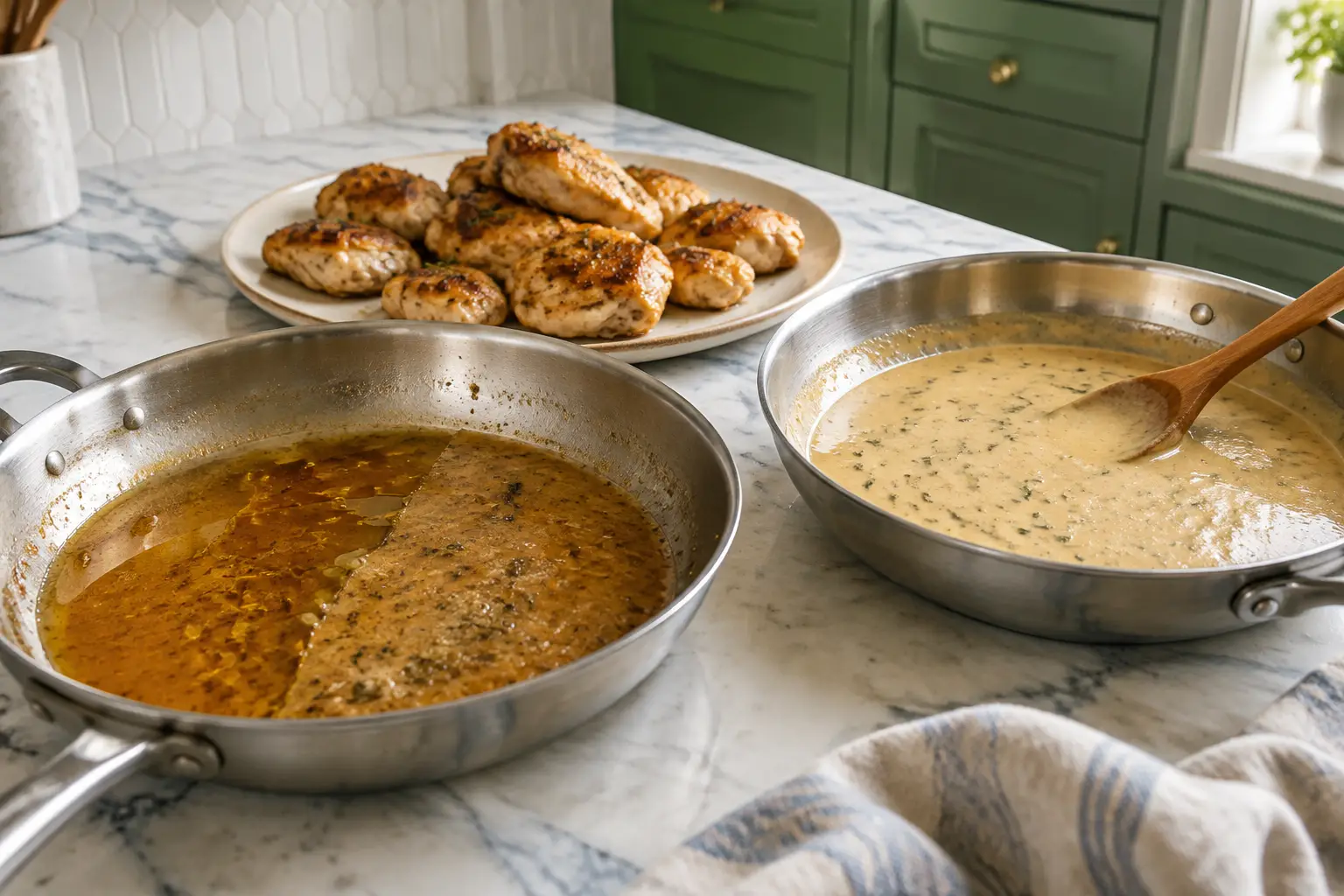
Most deglazing mistakes come from excess heat, insufficient scraping, or reducing before considering salt and acidity. Taste the sauce as it changes—not just at the end.
| Problem | Likely Cause | Better Move |
|---|---|---|
| Bitter, burnt flavor | Blackened fond or scorched aromatics | Discard the scorched base and start the sauce in a clean pan |
| Thin, weak sauce | Incomplete scraping or too much liquid | Release the remaining fond and reduce further if seasoning allows |
| Overly salty sauce | Salted stock or cooking wine concentrated during reduction | Dilute with unsalted liquid; avoid reducing it straight back to the same concentration |
| Sharp, sour sauce | Too much vinegar or an overly concentrated acidic base | Dilute with unsalted stock or water; butter can soften the perception of acidity but cannot remove it |
| Greasy or separated sauce | Excess drippings fat or boiling after adding butter | Remove excess fat first and finish with butter off the heat |
| Very little fond | Crowding, wet food, or an easy-release surface | Improve browning next time; use stock for more flavor in this batch |
Store The Sauce And Care For The Pan
Refrigerate leftover sauce promptly in a covered container and use within 3–4 days. Reheat gently; butter-finished sauces can separate under a hard boil.
For longer storage, freeze the reduced sauce base before its butter finish when possible. Once thawed and heated, it is easier to finish smoothly. Let the empty cooking pan cool before washing rather than shocking it under cold water; dry bare cast iron thoroughly after cleaning.
Questions About Deglazing With Wine
Can You Deglaze A Pan With Wine, And What Does It Do?
Yes. Wine loosens browned residue and turns it into a flavorful liquid foundation. It also adds acidity and aroma; reduction then concentrates that foundation into a sauce.
Why Does Wine Deglaze A Pan?
Its water content dissolves much of the fond as heat and scraping help release it. Wine is useful, but alcohol is not required for the process.
Do You Have To Deglaze With Wine?
No. Stock and water both work. For deglazing a pan without alcohol, use either and balance the finished flavor with an appropriate alcohol-free acidic ingredient if needed.
What Can I Use Besides Wine, And Will Vinegar Work?
Stock, water, and the watery portion of pan juices are practical alternatives. Vinegar also releases fond, but its concentrated acidity makes it better as a small component alongside stock or water than as a full-volume wine substitute.
How Much Wine Should I Use, And When Do I Add It?
Start with the skillet range in the timing table unless your recipe specifies otherwise. Add it after removing the browned food and softening any aromatics, before the fond turns black.
How Do I Deglaze, And How Long Does It Take?
Add the measured liquid to the hot pan and scrape while it bubbles. Fond usually releases quickly; allow additional time for reduction. Judge by the recipe’s volume target, the sauce’s texture, and a softened wine aroma—not a timer alone.
Bring Every Browned Bit Into The Sauce
For deglazing a pan with wine, I would put a simple Wooden Spoon, 12-inch to work before chasing another fancy tool. Its firm edge helps loosen fond and stir the reduction, though wood needs hand-washing and thorough drying. Buy one with a broad, fairly flat edge so the flavor comes off the pan and onto dinner.
Make those browned bits count. Get the Wooden Spoon, 12-inch here and put it to work on your next pan sauce.


